


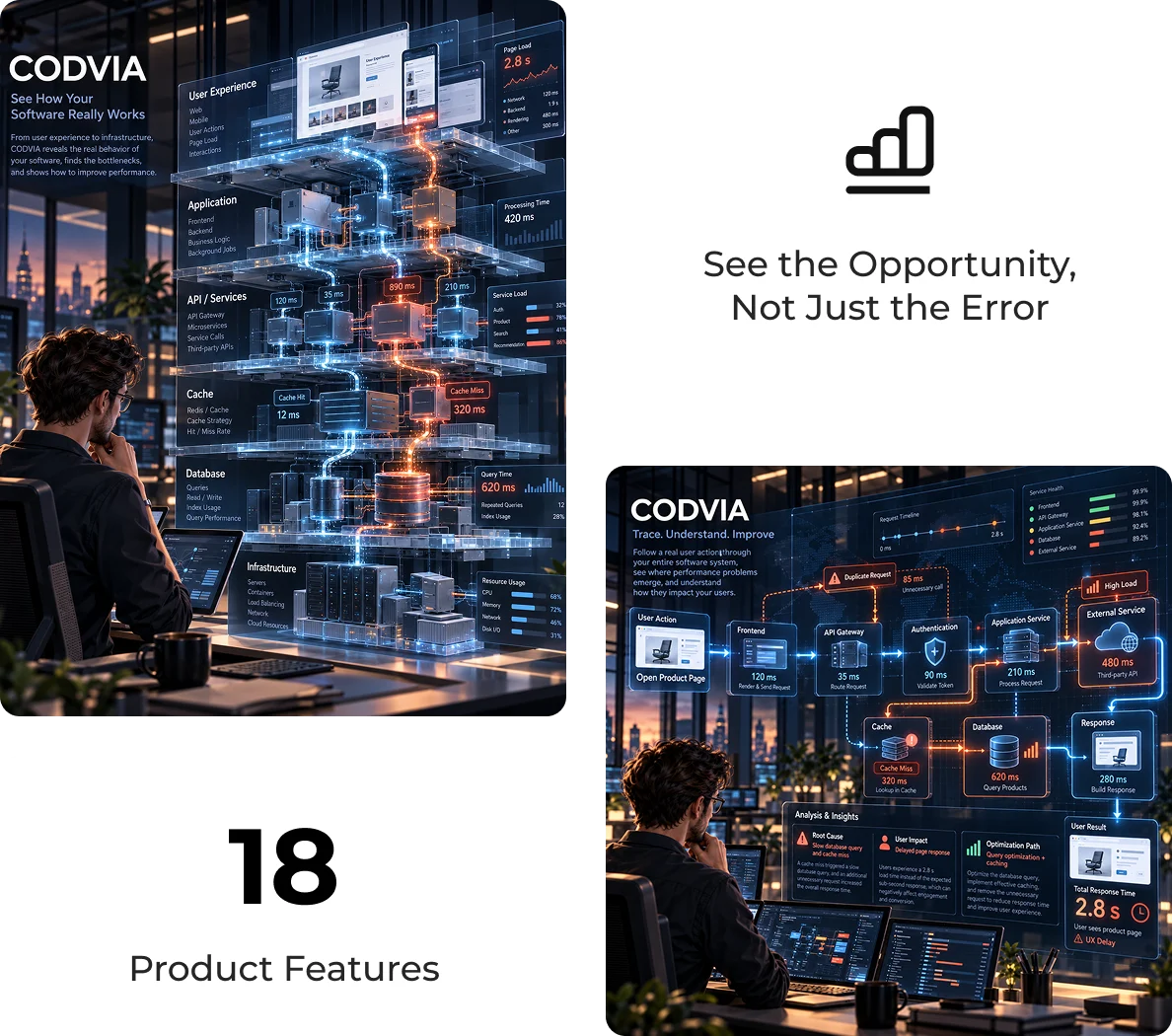
What Is Codvia?
Codvia is a software resource and experience analysis system I developed to make software execution flows, interactions between system components, and performance bottlenecks affecting the user experience more visible. Rather than examining source code in isolation, it focuses on how software behaves during execution, mapping everything from API requests and database query times to caching behavior and communication between components.
I designed Codvia as an analytical insight layer for technical evaluation processes rather than a standalone SaaS product. The system aims to identify performance bottlenecks, accumulated technical debt, scalability risks, and hidden friction points that affect the user experience. By making these issues easier to understand, Codvia supports data-informed decisions about software improvements, performance optimization, and architectural restructuring.
I approached Codvia not simply as a performance measurement tool, but as an analytical layer designed to understand software behavior as a whole. It brings together execution patterns, system resource utilization, interactions between services, and technical constraints that influence the user experience within a unified analytical framework. This approach helps development teams make more informed technical and strategic decisions. By functioning as a diagnostic engine that reveals otherwise difficult-to-observe aspects of software behavior, Codvia aims to support development quality, architectural improvements, and long-term software sustainability.
How Does It Work?
The process begins with an examination of the project's codebase, infrastructure components, data flows, API traffic, and user interaction patterns. Codvia passively collects log data, performance metrics, load distribution information, and execution call chains. Together, these data points provide a detailed view of how the software operates and how its components interact.
The analytical layer then identifies performance bottlenecks, unnecessary database queries, inefficient caching, architectural imbalances, user experience delays, and potential optimization opportunities. In the final stage, these insights are consolidated into a structured report that explains what needs improvement, why the issues occur, and how they can be addressed.
Who Is It For?
Software products experiencing inconsistent performance or recurring technical issues.
Applications where speed, scalability, and operational reliability are critical.
Digital products requiring technical improvements to the user experience.
Development teams planning refactoring, architectural restructuring, or performance optimization.
Data-intensive web applications, SaaS platforms, e-commerce systems, and management dashboards requiring performance analysis.
Architectural Analysis Approach
My starting point was the observation that performance problems often originate not from individual lines of code, but from how software workflows are designed. Codvia goes beyond identifying technical issues by connecting their causes, impact, and potential solutions. This approach helps development teams make informed decisions based on evidence rather than assumptions.
I designed the system to connect technical architecture with business objectives. Its analytical framework aims to show how optimization decisions can influence user satisfaction, conversion rates, operational costs, and scalability. My goal was to create a technical insight layer that supports not only software functionality but also sustainable growth and long-term system health.
Codvia is designed to go beyond identifying immediate issues by supporting long-term technical debt management, architectural readiness, and more informed development decisions. Its multidimensional analysis provides a practical reference point for evaluating code quality, performance strategies, and scalability requirements. This allows software teams to prioritize improvements using data-driven insights rather than relying on assumptions or isolated observations. My fundamental approach was to provide the technical visibility needed to understand how software performs today while helping teams prepare its architecture for future demands.

Frequently Asked Questions

If you would like to discuss this project, similar work, potential collaborations, or professional opportunities, you can contact me by filling out the form below.
E-mail;


